






Industry Insights
28/05/2026
Share


When AI Meets Energy Storage: HyperStrong's Compute-Power Synergy Strategy
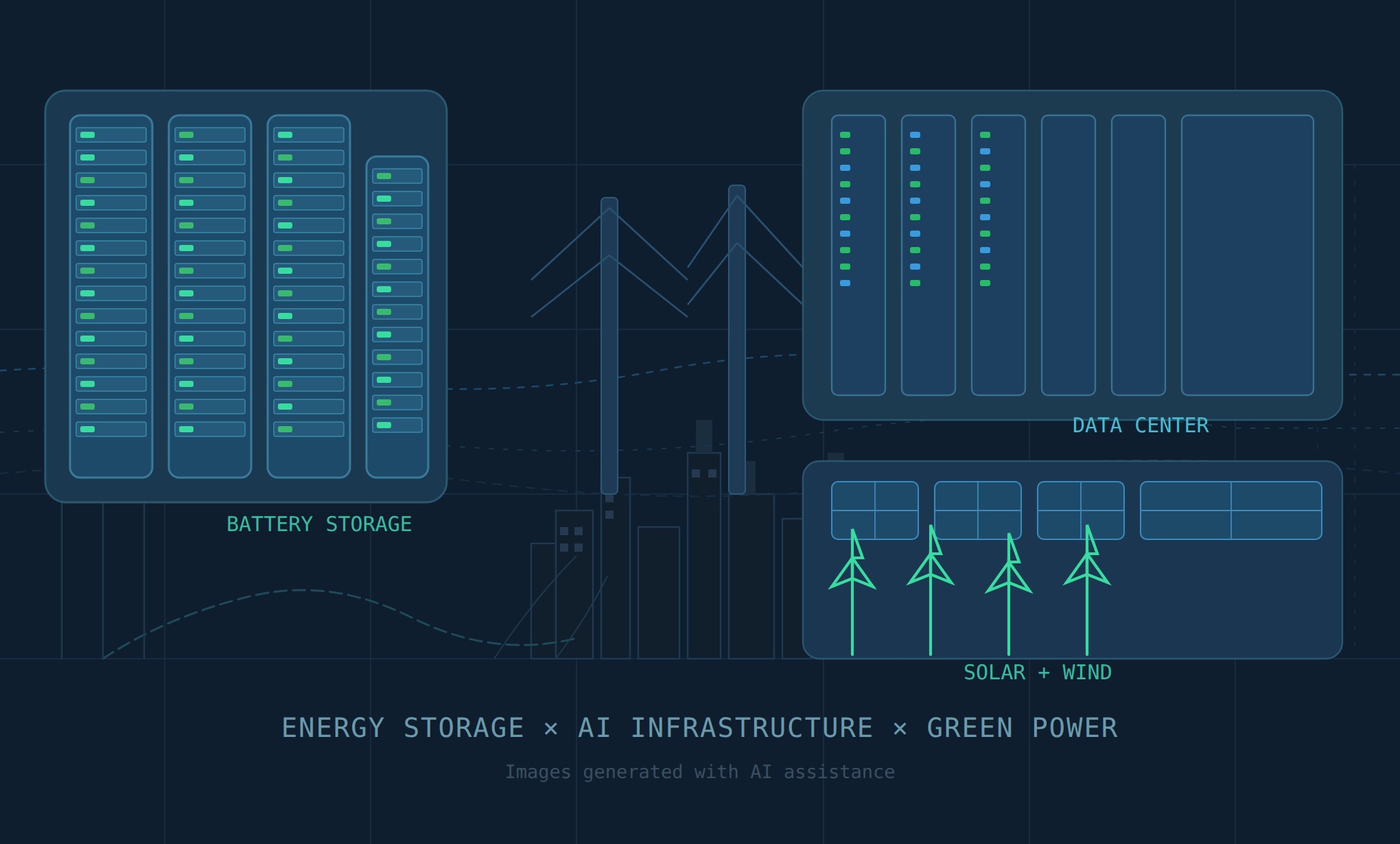
The phrase "AI ends at compute; compute ends at power" is moving from industry slogan to investment thesis. As AI infrastructure buildout accelerates globally, the intersection of energy storage and data center power has become one of the most actively pursued opportunities in the clean energy sector — and one HyperStrong has made a core strategic focus.
Why data centers are a compelling storage market
HyperStrong sees two reasons data centers stand out as a storage opportunity: fast-growing power demand and relatively high electricity cost tolerance.
On the demand side, projections suggest AI data center power consumption will exceed 8% of total national electricity use in China by the end of the current planning cycle — with similar trajectories visible globally. On the cost side, for a 3,000-petaflop data center, server hardware investment runs to roughly RMB 1 billion, with annual electricity consumption under 100 million kWh. Against that hardware cost base, energy price variation has a smaller impact on overall economics than in more price-sensitive industrial loads — creating room for storage to capture value that wouldn't exist elsewhere.
HyperStrong's view: within five years, storage demand from AI data center scenarios could rival traditional grid-scale independent storage.
What genuine compute-power synergy requires
Not every data center near a wind farm or a PV power station qualifies as true compute-power synergy. The key enabling condition is that a meaningful portion of compute workloads are deferrable — large model training, scientific computing, rendering, and data processing tasks that don't need to run at any particular moment. This creates a schedulable load that can shift in response to electricity price signals.
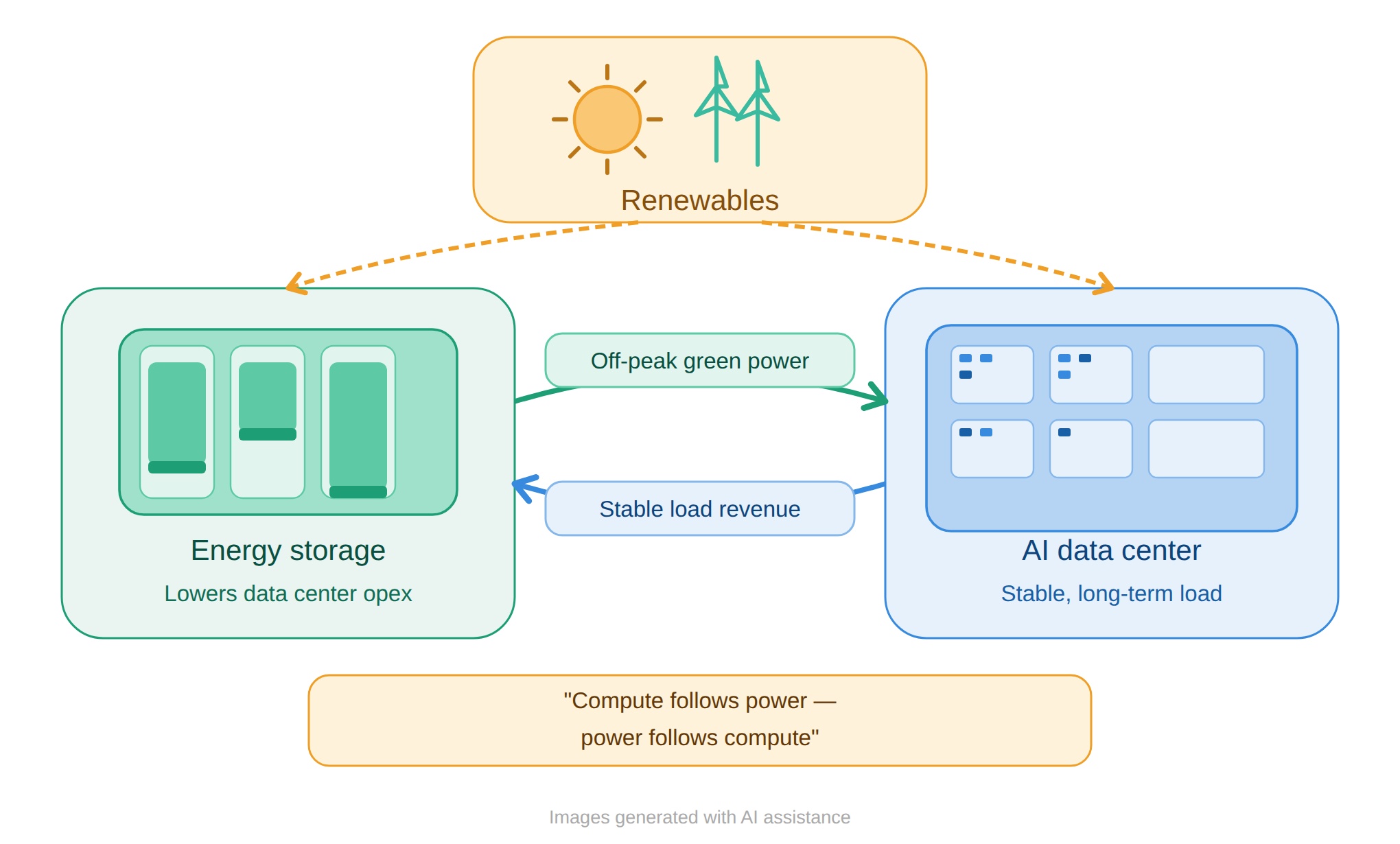
Combined with storage acting as a temporal buffer for renewable generation, the result is a bidirectional optimization: storage moves cheap electricity to when it's needed; compute moves load to when electricity is cheap. HyperStrong's target state is "compute follows power, power follows compute" — dynamic dispatch running in both directions simultaneously.
HyperStrong's current moves
HyperStrong has announced its first integrated storage-compute project, planned for Baotou, Inner Mongolia — a region with high renewable resource density, industrial-grade grid infrastructure, and available land. The project will deploy a lithium-sodium hybrid storage architecture at GWh scale, underpinned by a recently signed three-year, 60 GWh sodium-ion battery supply agreement with CATL. Sodium-ion chemistry brings advantages in cycle life, wide-temperature-range operation, and safety characteristics that complement lithium at large scale.
On the power electronics side, HyperStrong is developing a proprietary 35kV solid-state transformer (SST), targeting release by end of 2026. The higher voltage rating — versus the 10kV products that dominate the current market — is designed to serve integrated storage-compute campuses rather than conventional behind-the-meter installations. The SST functions not just as a step-down transformer but as an active energy routing hub across the full generation-grid-load-storage chain.
Storage operations as a software business
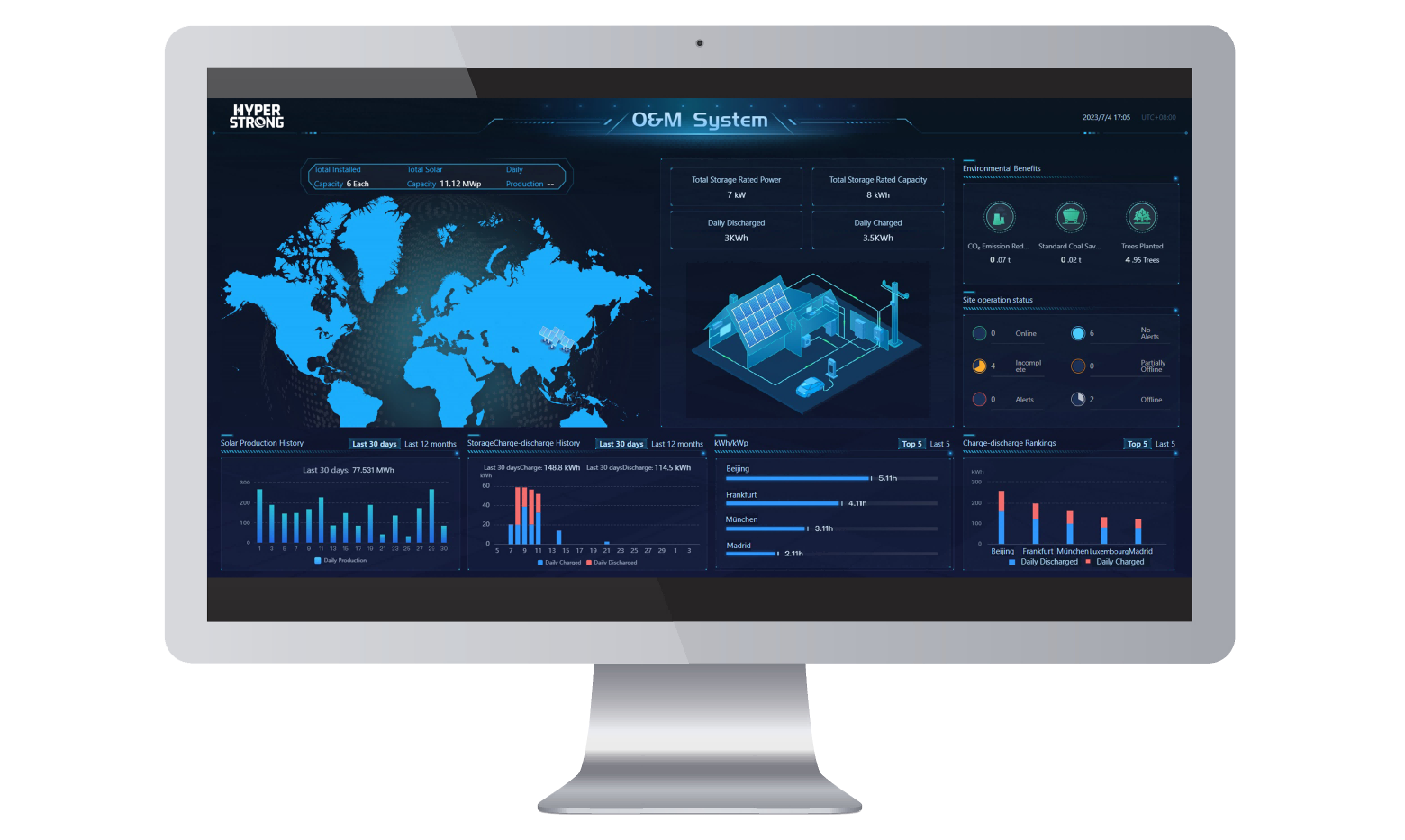
Beyond new projects, HyperStrong operates multiple GWh-scale independent storage stations, with power trading as an increasingly central capability. AI-driven forecasting tools for electricity price prediction and dispatch optimization — including proprietary peak-valley forecasting algorithms and intraday price volatility models — consistently deliver above-market trading returns. Storage operations at scale increasingly look like a data and software business layered on top of a hardware asset.
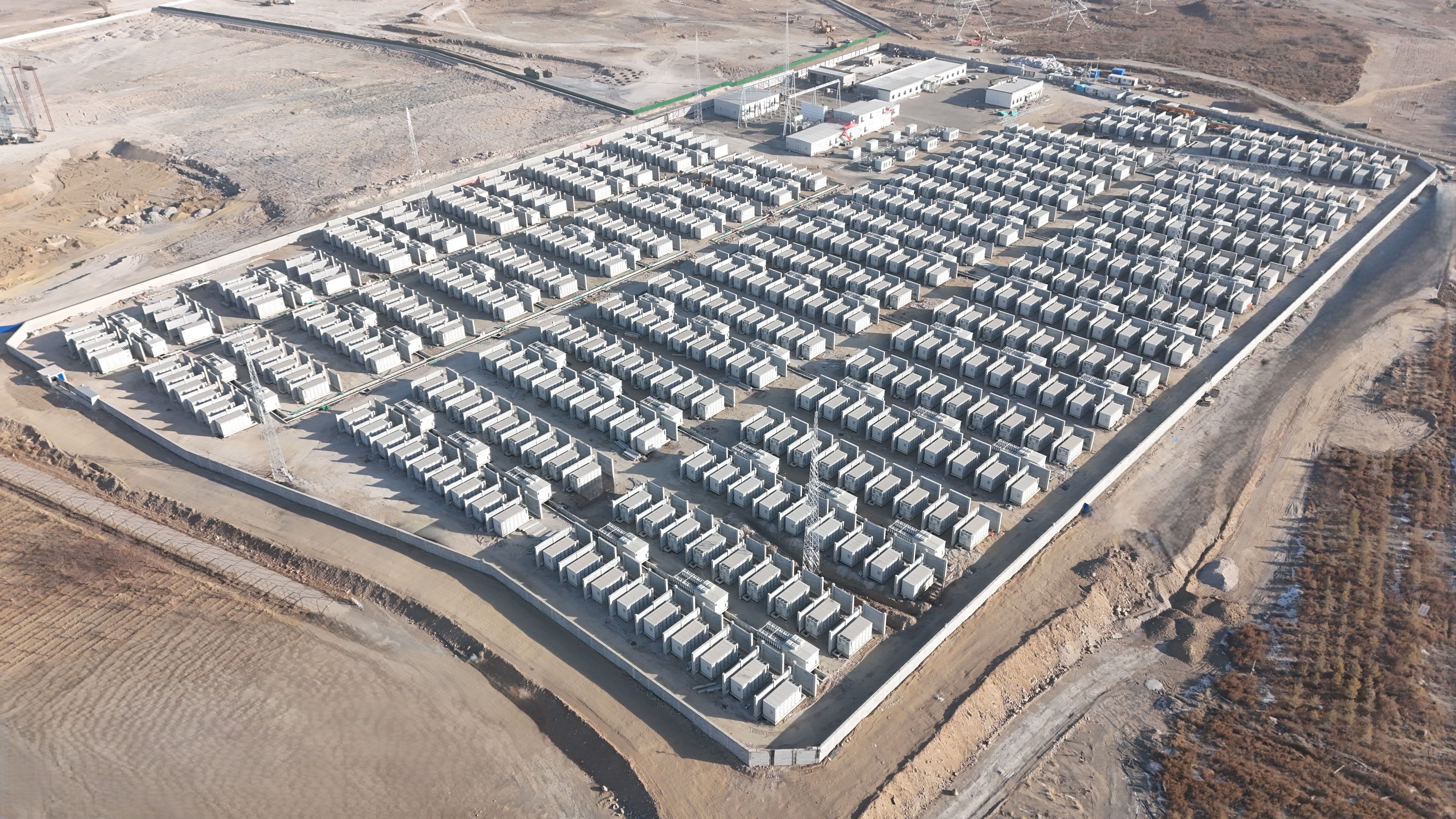
(HyperStrong 400 MW/2400 MWh Baotou Boerhantu Project)
The same AI stack supports safety monitoring, fault prediction, and automated maintenance guidance across the operating fleet.


